
Paper Planner vs. Budgeting App: Why Writing Helps Cognition
A paper budget planner is better than a budgeting app because writing by hand improves memory, focus, and financial awareness. Apps automate your spending, which can lead to missed bills and mis-categorized expenses. Writing down your income and bills forces you to actively engage with your money, leading to better long-term habits.
The Problem with Budgeting Apps
Budgeting apps seem like a great idea. You link your bank account, and the app does the work for you. But this convenience comes with a hidden cost. When you rely on an app, you stop paying attention. You stop checking your bank balance. And when the app makes a mistake—like categorizing a $100 grocery run as "miscellaneous" because you bought a gift card—you do not notice until your budget is already broken.
Why Writing Down Your Finances Works Better
Research on learning and cognition shows that writing things down by hand forces your brain to process the information more deeply. When you write down your income and expenses, you are not just recording numbers; you are actively engaging with them. You see the gap between what you earn and what you spend. You feel the impact of your decisions. This active awareness is what builds real financial discipline.
The Cost of Convenience
Budgeting apps are not free. Most of the popular ones charge a monthly or yearly subscription, which can easily total $100 or more per year. A paper planner is a one-time purchase. You buy it once, and you use it all year. And when the year is over, you have a physical record of your progress that you can look back on, which an app will never give you.
Paper Planner vs. Budgeting App Comparison
| Feature | Paper Planner (Theosis Books) | Budgeting App |
|---|---|---|
| Awareness | High (active writing) | Low (automated) |
| Categorization | Manual and accurate | Automated and often flawed |
| Cost | One-time purchase | $100+ per year (subscription) |
| Memory | Improved by handwriting | Reduced by automation |
| Offline Access | Yes (works anywhere) | Usually requires internet |
Which Paper Planner is Right for You?
If you are ready to ditch the app and switch to paper, you need to pick the right book for your stage of life.
| Your Situation | Best Book | Why It Works |
|---|---|---|
| You are a beginner who needs to understand how to budget. | Achieve Financial Peace Budget Planner | Includes a crash course on money psychology, 8 expense tracking pages per month, and a dedicated debt strategy section. |
| You know how to budget and just need a lightweight tracker. | 60 Month Bill Payment Tracker | A 5-year, undated tracker for bills, savings, and deposits. No calendar bulk. |
| You want to track bills and replace your desk calendar. | Monthly Bill Payment Checklist with Calendar | A 2-in-1 tracker with a full monthly calendar and a comprehensive bill payment checklist. |
Best For / Not Best For
Best for:
- People who have tried apps and ended up more stressed.
- Anyone who wants to actively track their money and build better habits.
- Visual learners who need to see their finances on paper.
Not best for:
- People who refuse to write things down by hand.
- Those who want automated bank feeds to do all the work for them.
Frequently Asked Questions
Why is writing down a budget better than using an app?
Writing down a budget forces active engagement. When you write numbers by hand, you process the information more deeply, which improves memory and awareness. Apps automate the process, which often leads to mindless spending and missed bills.
Are budgeting apps a waste of money?
They are not a waste, but they are expensive. Most budgeting apps cost around $100 per year via subscription. A high-quality paper planner is a one-time purchase that lasts a full year or more, saving you money in the long run.
Do budgeting apps categorize your spending automatically?
Yes, and this is a problem. Automatic categorization often makes mistakes. For example, an app might categorize a $100 grocery store purchase as 'miscellaneous' if you bought a gift card. Writing it down manually ensures you know exactly where your money went.
Where to Find the Right Book
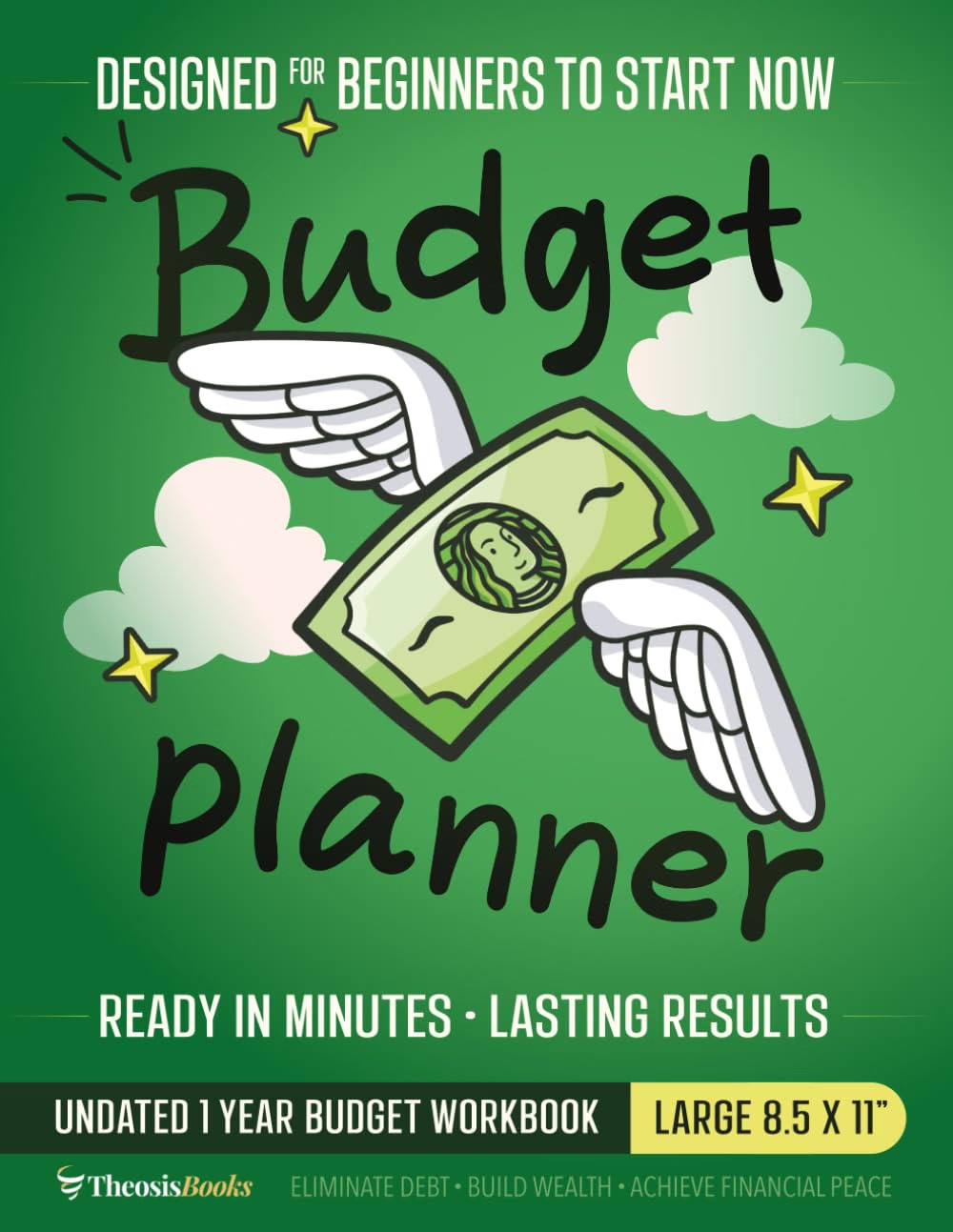
If you are ready to put down the app and pick up a pen, the Achieve Financial Peace Budget Planner by Theosis Books is the perfect starting point. It includes a full tutorial, 8 pages of expense tracking per month, and a debt strategy section to help you build real financial awareness.